
Why Digital Marketing is the Future of Business in India
In the last decade, India has witnessed a massive digital transformation. With millions of people using smartphones, social media platforms, and search engines every day, businesses are rapidly shifting their focus from traditional marketing to digital marketing. Today, having an online presence is no longer an option—it is a necessity for businesses that want to grow, compete, and succeed in the modern marketplace.
Digital marketing has become one of the most powerful tools for businesses because it allows brands to connect directly with their target audience. Whether it is a local startup, a growing e-commerce store, or a well-established company, digital marketing provides opportunities to reach potential customers faster and more effectively than traditional advertising methods.
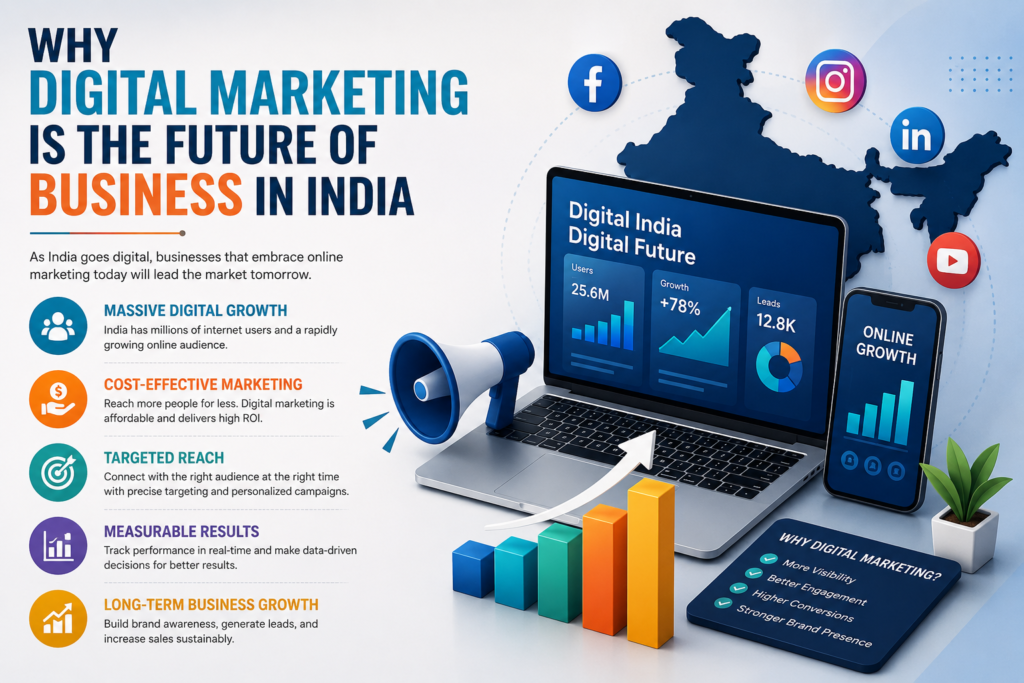
The Rise of Digital India
India is one of the world’s largest internet markets, with millions of active internet users. People rely on Google to search for products and services, spend hours on social media platforms, and make purchasing decisions based on online reviews and recommendations.
As consumer behavior continues to evolve, businesses must adapt to these changes. Companies that fail to establish a strong online presence risk losing potential customers to competitors who actively engage with audiences through digital channels.
The government’s Digital India initiative has also contributed significantly to increasing internet accessibility across the country. As more people gain access to the internet, the demand for digital products, services, and online experiences continues to grow.
Cost-Effective Marketing for Businesses
One of the biggest advantages of digital marketing is its affordability. Traditional advertising methods such as television commercials, newspaper advertisements, and billboards often require significant investments. In contrast, digital marketing allows businesses to reach a targeted audience at a fraction of the cost.
Small and medium-sized businesses can use social media marketing, content marketing, and search engine optimization (SEO) to attract customers without spending large amounts on advertising. Even businesses with limited budgets can compete with larger brands by implementing smart digital marketing strategies.
Better Audience Targeting
Digital marketing enables businesses to target specific audiences based on demographics, interests, behaviors, and locations. This means companies can deliver personalized messages to people who are most likely to become customers.
For example, a clothing brand can target young adults interested in fashion, while a local restaurant can reach customers within a specific city. This level of precision improves marketing effectiveness and increases the chances of generating leads and sales.
Unlike traditional marketing, where advertisements are shown to a broad audience regardless of interest, digital marketing focuses on reaching the right people at the right time.
Improved Customer Engagement
Today’s consumers expect brands to be accessible and responsive. Digital marketing allows businesses to communicate directly with customers through social media platforms, emails, websites, and messaging apps.
Brands can answer questions, respond to feedback, and build meaningful relationships with their audience. This direct interaction helps establish trust and loyalty, which are essential for long-term business success.
Engaged customers are more likely to recommend a brand, leave positive reviews, and become repeat buyers, contributing to sustainable business growth.
Measurable Results and Data Insights
One of the most valuable aspects of digital marketing is the ability to measure performance. Businesses can track website traffic, social media engagement, conversion rates, and advertising results in real time.
Analytics tools provide valuable insights into customer behavior, allowing businesses to understand what works and what needs improvement. This data-driven approach helps marketers make informed decisions and optimize campaigns for better performance.
Unlike traditional marketing, where measuring success can be difficult, digital marketing provides clear metrics that help businesses maximize their return on investment.
The Growing Importance of SEO and Content Marketing
Search Engine Optimization (SEO) and content marketing play a crucial role in helping businesses increase their online visibility. Consumers often begin their buying journey by searching for information on Google.
Businesses that create valuable content and optimize their websites for search engines can attract organic traffic and establish themselves as industry experts. High-quality blogs, informative articles, videos, and social media content help build credibility and trust among potential customers.
As competition grows online, businesses that invest in SEO and content marketing will have a greater chance of standing out in search results and attracting qualified leads.
Social Media: The New Marketplace
Social media platforms such as Instagram, Facebook, LinkedIn, and YouTube have transformed the way businesses market their products and services. These platforms provide opportunities to build brand awareness, showcase products, and interact with customers in real time.
Social media also enables businesses to create communities around their brands, encouraging engagement and customer loyalty. Through creative content, influencer collaborations, and targeted advertising, businesses can significantly expand their reach and influence.
For many consumers, social media is now the first place they discover new brands, making it an essential part of any marketing strategy.
The Future of Business Growth
As technology continues to evolve, digital marketing will become even more important. Artificial Intelligence (AI), voice search, automation, and personalized marketing are already shaping the future of the digital landscape.
Businesses that embrace digital marketing today will be better prepared for future opportunities and challenges. Companies that invest in building a strong online presence can achieve sustainable growth, increase brand awareness, and reach customers across India and beyond.
Conclusion
Digital marketing is not just a trend—it is the future of business in India. With increasing internet usage, changing consumer behavior, and advancements in technology, businesses must adapt to remain competitive.
From improving brand visibility and customer engagement to generating leads and increasing sales, digital marketing offers countless opportunities for growth. Businesses that leverage digital marketing effectively can build stronger relationships with customers, stay ahead of competitors, and create long-term success in the digital age.
Whether you are a startup, entrepreneur, or established business, investing in digital marketing today is one of the smartest decisions you can make for your future growth.